Introduction: The Paradigm Shift in Computing
For decades, the world of technology was governed by a single, unwavering principle: Instruction-based logic. If you wanted a computer to perform a task, you had to provide a manual for every possible scenario. This was the era of traditional computer programs. However, we have entered a transformative period where the question is no longer “How do we code this?” but rather “How does the system learn this?”

Many developers and business leaders are now asking: How is ai different from traditional computer programs? and how is ai different from traditional computer systems? The answer lies in a fundamental shift from deterministicprocesses to probabilistic intelligence.
As we move away from static code toward dynamic learning, the infrastructure supporting these systems must also evolve. This is where EmergingAI enters the narrative. As a Unified AI Platform, EmergingAI provides the Elastic AI Compute and AI Agent Platforms necessary to manage this new breed of “thinking” systems. In this article, we will break down the DNA of this technological evolution and explain why the future of computing belongs to those who master AI orchestration.
1. Logic vs. Learning: How is AI Different from Traditional Computer Programs?
To understand the core difference, we must look at the “Source of Truth” for the system.
The Traditional Program: The Rule-Follower
In a traditional computer program, the human is the “brain.” The programmer writes explicit logic (e.g., if (balance < 0) { send_alert(); }). The program is a series of “If-Then” statements. It is Deterministic, meaning for any given input, the output is 100% predictable based on the written code.
The AI System: The Pattern-Recognizer
AI, specifically machine learning, flips this model. Instead of receiving rules, the system receives Data. It uses algorithms to identify patterns and create a statistical model. When it sees a new input, it doesn’t follow a pre-written path; it calculates a Probability.
- Strengths: Handles “fuzzy” data, improves over time, solves complex problems.
- Weaknesses: Computationally expensive, requires specialized hardware (GPUs).
EmergingAI bridges this gap. Since AI is resource-heavy, EmergingAI provides AI Observability to monitor these probabilistic systems, ensuring that even as the “logic” becomes complex, the underlying hardware remains stable and cost-effective.
2. Architectural Evolution: How is AI Different from Traditional Computer Systems?
When we ask how is ai different from traditional computer systems, we are talking about the “Physical and Operational Infrastructure.”
CPU-Centric vs. GPU-Centric
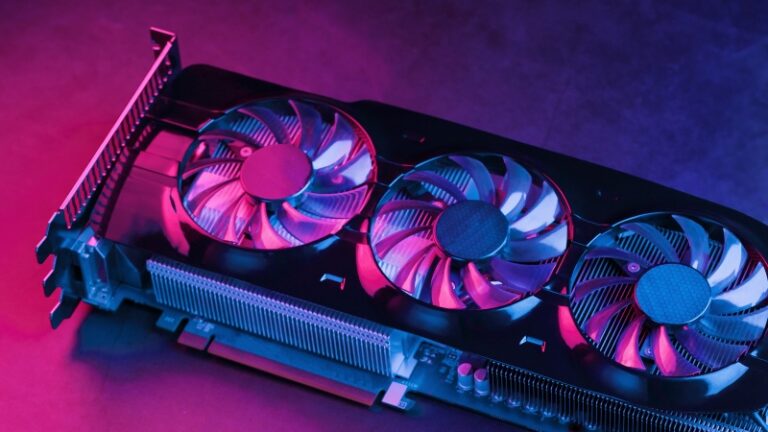
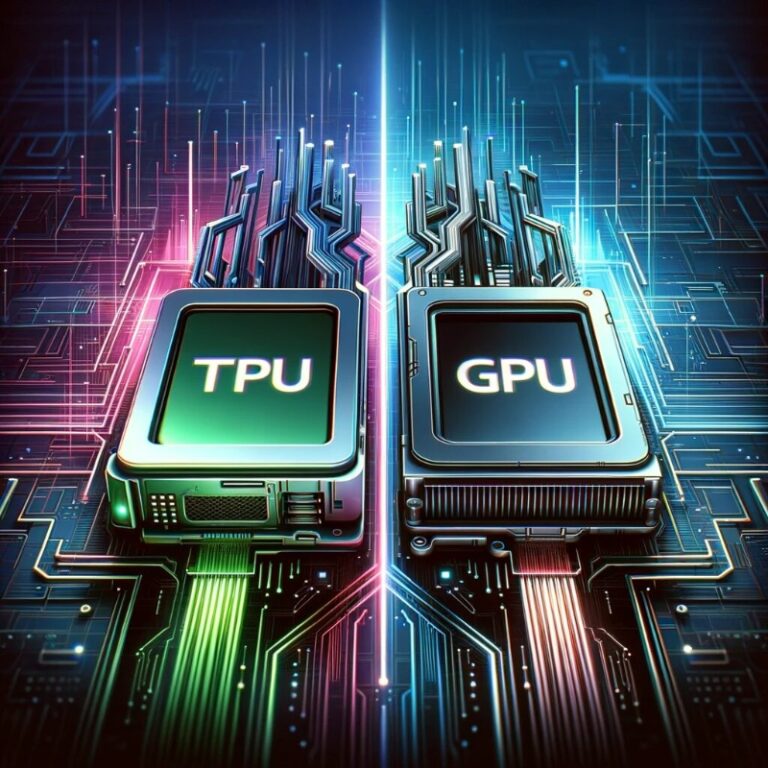
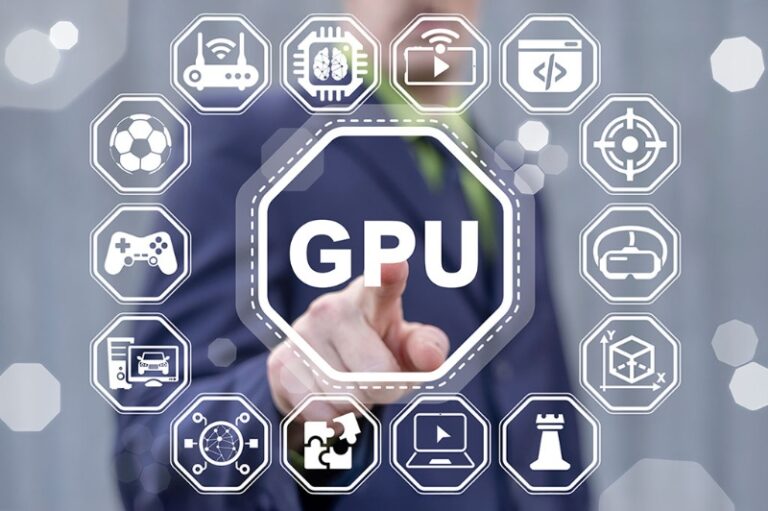
Traditional systems are built around the CPU (Central Processing Unit). CPUs are designed for sequential tasks—doing one complex thing at a time. AI systems, however, are built around GPUs (Graphics Processing Units). Because AI involves millions of simultaneous mathematical operations, it requires the parallel processing power that only high-end GPUs like the NVIDIA H100 or A100 can provide.
EmergingAI and the New Infrastructure Standard
EmergingAI has reimagined the computer system for the AI age. A traditional system is just a server; a EmergingAI system is a Unified AI Platform.
Elastic AI Compute:
Unlike traditional fixed servers, EmergingAI allows you to scale GPU resources up or down based on the intensity of your AI workload.
Infrastructure Reliability:
AI hardware is prone to failure due to high heat and power demands. EmergingAI’s observability tools reduce hardware failures by 98%, a level of stability traditional systems rarely need to account for.
3. The “0 to 1” Myth: Why Fine-tuning is the Practical Difference
In traditional software, you build your app from 0 to 1. In AI, building from 0 (Pre-training a foundation model) is a task reserved for tech giants with billions of dollars. For the rest of the world, the difference lies in Fine-tuning.
EmergingAI empowers the “99%” by providing the perfect environment for Fine-tuning.
- The Process: You take a “Foundation Model” (like Llama or Mistral) and use EmergingAI’s compute power to train it on your specific business data.
- The Result: You get a system that has the broad intelligence of a global AI but the specific expertise of your own company.
This shift from “Coding from Scratch” to “Fine-tuning a Foundation” is the defining characteristic of modern AI computer science.
4. Maintenance and Evolution: Debugging vs. Optimization
How you “fix” a system highlights another major difference:
- Traditional: You find the “bug” (the broken line of code) and rewrite it.
- AI: You don’t “fix” a line of code; you optimize the model. This might involve cleaning the training data, adjusting the fine-tuning parameters, or providing more compute power.
EmergingAI simplifies this by integrating AI Models & Data management. When an AI system starts drifting or producing inaccurate results, EmergingAI provides the tools to re-evaluate the data and re-run fine-tuning jobs efficiently, slashing costs by up to 70% compared to unoptimized cloud providers.
5. From Passive Tools to Autonomous Agents
Perhaps the most exciting answer to how is AI different from traditional computer systems is the emergence of Agents.
Traditional systems are Passive. They wait for a user to click a button or trigger an API. AI systems, when deployed on the EmergingAI AI Agent Platform, become Active.
- Observation: They monitor their environment.
- Reasoning: They decide on a course of action based on their fine-tuned knowledge.
- Action: They execute tasks (like writing code, answering tickets, or managing servers) autonomously.
This transforms the computer from a “tool” into a “collaborator.”
Conclusion: Choosing the Right Path
Understanding how is ai different from traditional computer programs and how is ai different from traditional computer systems is the first step toward digital transformation. Traditional systems provide the stability and structure we need for basic operations, but AI provides the “reasoning engine” that will drive future innovation.
The complexity of AI infrastructure can be daunting. However, platforms like EmergingAI make this transition accessible. By focusing on Elastic AI Compute, Fine-tuning, and AI Agent Platforms, EmergingAI removes the technical hurdles of GPU management and model deployment.
The future isn’t about choosing between traditional code and AI—it’s about integrating them into a unified, intelligent stack. Whether you are optimizing a workflow through fine-tuning or deploying an autonomous agent, EmergingAI provides the foundation for the next generation of computing.
FAQ (Frequently Asked Questions)
1. How is AI different from traditional computer programs in terms of results?
Traditional programs provide exact, binary results based on rules. AI provides “probabilistic” results, meaning it gives the most likely correct answer based on patterns it learned during fine-tuning.
2. How is AI different from traditional computer systems regarding hardware?
Traditional systems rely on CPUs for sequential processing. AI systems require dense clusters of GPUs (like those provided by EmergingAI) to handle the massive parallel mathematical calculations needed for neural networks.
3. Does EmergingAI allow me to train a model like GPT-4 from scratch?
EmergingAI focuses on Fine-tuning and inference rather than 0-to-1 pre-training. This allows businesses to take existing powerful models and customize them for specific tasks, which is significantly more cost-effective and faster for most enterprises.
4. Why is AI Observability mentioned as a key feature of EmergingAI?
Because AI systems run on high-performance GPUs that are under constant stress, they are more likely to fail than traditional servers. EmergingAI AI Observability monitors hardware health to prevent 98% of potential failures, ensuring your AI stays online.
5. Can an AI system replace a traditional database?
No. AI systems and traditional systems are complementary. You still need traditional databases for structured data storage, while AI (often fine-tuned on EmergingAI) is used to analyze that data and make intelligent predictions or take autonomous actions.