TL;DR: The Architecture of LLM Data
The Evolution of Data Mix: Modern LLMs (Llama 3, GPT-5 era) rely on a strategic blend of High-Quality Web Crawls, Structured Code Repositories, and an increasing ratio of Synthetic Data to overcome the “Public Data Exhaustion” limit.
The Quality Filter: Data volume is no longer the primary KPI. The focus has shifted to De-duplication, Pii-stripping, and Heuristic Filtering to maximize the “Token-per-Watt” efficiency during training.
Corporate Integration: For enterprise-grade RAG and Fine-tuning, the focus is on Proprietary Data Vaults—private, high-security datasets that provide the “Domain Expertise” off-the-shelf models lack.
EmergingAI Advantage: Our platform provides High-speed NVMe Storage Fabrics and Optimized Data Loaders, ensuring your massive training sets are fed into GPUs at wire-speed, eliminating the “I/O Wait” in large-scale refinement.
1. The Three Pillars of Modern LLM Datasets
The “Training Set” is no longer just a raw dump of the internet. It is a highly curated Token Stream categorized into three distinct layers:
A. High-Fidelity Public Data
This includes the Common Crawl, PubMed, and ArXiv. However, the 2026 standard requires aggressive filtering.
Key Insight: Models are now trained on trillions of tokens where “low-quality” content (SEO spam, toxic text) is removed via secondary AI classifiers.
B. Synthetic Data (The New Frontier)
As high-quality human-generated text becomes scarce, developers use “Teacher Models” to generate complex reasoning chains and synthetic textbooks.
The ROI: Synthetic data allows for a denser “Knowledge-to-Token” ratio, which EmergingAI-optimized clusters can process with higher accuracy during specialized fine-tuning.
C. Code & Logic Repositories
Datasets like The Stack (StackOverflow/GitHub) are critical. Training on code doesn’t just help the model write Python; it teaches the model Logical Reasoning and Chain-of-Thought (CoT) structures.
2. From Raw Files to VRAM: The Data Ingestion Bottleneck
When scaling AI without “breaking the bank,” the speed at which data reaches the GPU is paramount.
The Problem:
Slow data ingestion leads to Idle Silicon, where $30,000 GPUs sit waiting for the next batch of data from slow hard drives.
The Solution:
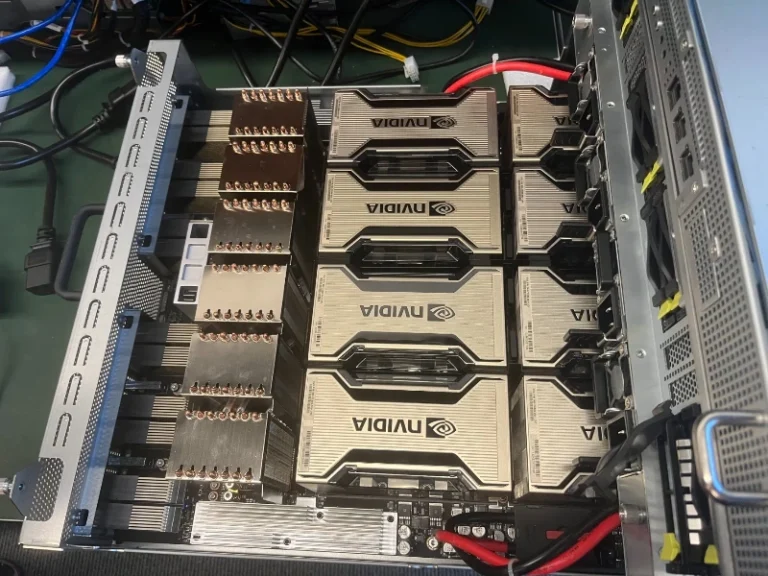
EmergingAI utilizes GPUDirect Storage (GDS) and PCIe 5.0 interconnects to stream pre-processed datasets directly from high-speed NVMe storage to VRAM.
3. Legal Provenance & Data Ethics
In the enterprise world, “where the data comes from” is a legal question as much as a technical one.
Data Provenance:
Modern models now include “Data Passports” that track the lineage of training sets to ensure compliance with global copyright laws.
Private Vaulting:
Through EmergingAI Integrated AI Observability, enterprises can fine-tune models on their private data within isolated enclaves, ensuring that proprietary knowledge never leaks into the public domain.
Expert FAQ
Q: Do LLMs “remember” everything they read during training?
A: No. LLMs do not store data like a database. They learn statistical patterns and relationships between tokens. However, “memorization” can occur with highly repetitive data, which is why De-duplication in the EmergingAI data pipeline is critical.
Q: Is Wikipedia still the most important data source for AI?
A: While high in quality, Wikipedia accounts for less than 3% of the total tokens in 2026-scale models. Its value lies in providing a ground-truth baseline for factual accuracy during the initial stages of training.
Q: How does EmergingAI handle massive dataset transfers?
A: We provide dedicated 100Gbps+ networking fabrics and optimized S3-compatible object storage. This allows for the rapid movement of multi-terabyte datasets between your “Data Vault” and your compute nodes, reducing the setup time for new training jobs.